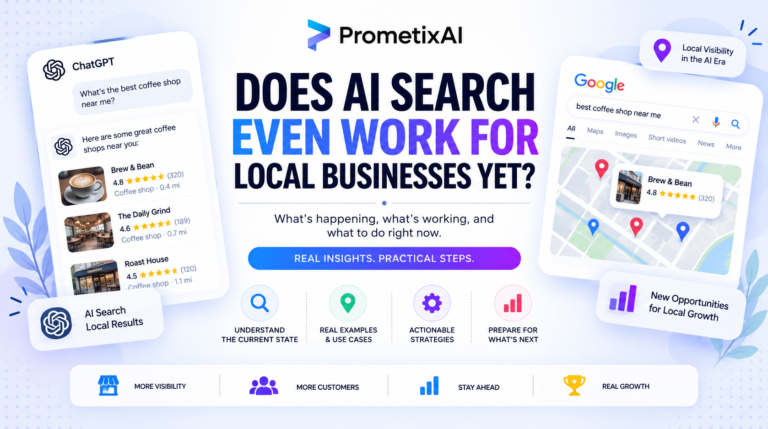
AI search traffic is up 527% in a year.
This shift is happening fast. And while most brands are still obsessing over Google rankings, a different selection process is already deciding which brands get cited, and which ones disappear entirely from the conversation.
Learning how to get cited by ChatGPT is not about tweaking your meta tags. It is about becoming the source an AI model considers trustworthy enough to quote.
By the end of this article, you will know exactly how that selection works, what signals matter, and how to build a brand that AI tools reach for by default.
How ChatGPT and AI Tools Actually Select Sources
AI tools do not rank pages. They filter and select sources, and that distinction matters more than most people realize.
When a user asks ChatGPT a question, the model runs through three steps: it understands the query, retrieves candidate sources, and then selects which source it will actually use to generate the answer.
Your content needs to survive all three steps, not just the first one.
Training Data vs. Live Retrieval
If you want to learn how to get cited by ChatGPT consistently, you need visibility in both training data and live retrieval systems.
Some AI citations come from static training data, which is everything the model learned during its initial training window.
But systems like ChatGPT Search and Perplexity operate as hybrid models. They combine that base knowledge with real-time retrieval using RAG (Retrieval-Augmented Generation) pipelines that pull live web content.
So your content can enter the AI data pipeline through either route, and optimizing for both is non-negotiable if you want consistent AI search citations.
The practical implication here is that freshness and crawlability matter just as much as content quality.
A well-written article sitting behind a slow, poorly structured page will lose out to a thinner piece that loads cleanly and gets indexed consistently.
What Makes a Source “Citable” to an LLM
There are three layers to citability: retrievability (can AI access your content?), extractability (can it parse and understand your content?), and trustworthiness (does it consider your source credible?).
Most brands fail at layer two. They create content that is technically accessible but structurally impossible for a model to extract a clean, usable answer from. This is the foundation of how to get cited by ChatGPT at scale.
Answer-First Content Is the Most Critical Signal
44% of AI citations come from the first 30% of content. If your hook is weak, you disappear. That is not a writing preference. That is a citation reality.
AI tools pull the most answer-dense section of a page, and if your first 60 words are a preamble about what you are going to say rather than an actual answer, you are handing citations to whoever did not make that mistake.
Write the answer first. Directly. Without hedging or buildup. Think of the opening of any piece as your “quote-ready” zone, because that is exactly how an LLM treats it.
Factual Density and Verifiability
AI models prefer checkable claims over general statements. A sentence like “AI tools are becoming more popular” gives a model nothing to work with.
A sentence like “37% of users now start with AI instead of traditional search” gives it something specific it can actually cite. The game has already changed, and so has the content standard.
Every stat needs a named source. Every claim needs to be specific enough that a model could verify it against another source. Generic writing gets skipped. Precise writing gets quoted.
Structural Clarity
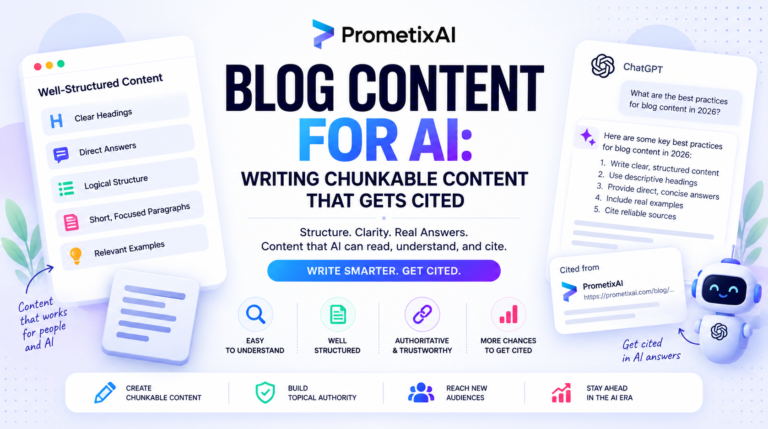
Headings formatted as questions, short focused sections, and FAQ clusters all improve a model’s ability to extract discrete answers.
AI systems parse content much the way a person would skim it: they look for signal-dense zones and skip long unbroken paragraphs.
If your page structure makes it hard to extract a clean answer, the model moves on to a source that does not.
Entity Authority: Why Your Brand Needs to Exist Everywhere
A major part of how to get cited by ChatGPT is building entity authority across multiple sources
Here is where most LLM SEO content gets shallow. Entity authority is not just about having a Wikipedia page or a LinkedIn profile.
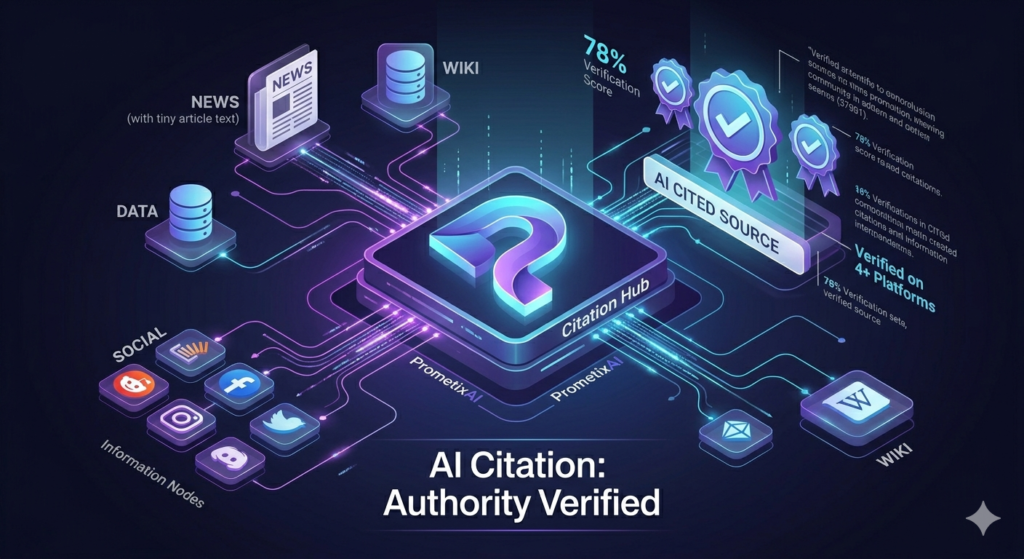
It is about building a consistent, cross-referenced signal that tells an AI model: this brand is real, this brand is credible, and this brand is associated with this specific topic.
How AI Builds a “Mental Model” of Your Brand
An AI model does not just read your website. It cross-checks what your website says against what other sources say about you.
If your brand appears on your own site but nowhere else, the model has no corroboration. It will default to a source it has seen validated across multiple contexts.
Backlinks and referring domains strongly correlate with AI citation frequency.
This is a practitioner-level insight from our own testing across client accounts: brands that appeared on three or more high-trust external sources were cited significantly more often than brands with strong on-site content but limited third-party mentions.
What Builds Entity Authority in Practice
Consistent mentions across industry publications, niche directories, community platforms like Reddit and Quora, and media sites all contribute to the signal.
The positioning also needs to be consistent. If your website says you are an “AI visibility platform” and your guest posts call you a “search optimization tool,” the model registers inconsistency and downgrades confidence.
You are not optimizing a page. You are building a recognized entity across the web, and that distinction changes almost every decision you make.
Content Formats That Get Cited, Not Just Ranked
If you are serious about how to get cited by ChatGPT, your content format matters as much as your content quality.
When working with clients on AI search citations, one pattern shows up consistently: definition-style content and comparison content get cited far more often than opinion pieces or long-form narrative posts.
The reason is structural. AI tools are answering questions, so they reach for content that is itself structured as an answer.
Definition and Comparison Content
“What is X?” articles perform exceptionally well in AI citation pipelines because they are unambiguous.
The model knows exactly what question this content answers. “Best tools for X” and “X vs Y” formats work for the same reason. They match the query pattern of a real user, and AI tools optimize for query-answer alignment.
FAQ Clusters
FAQ sections are some of the highest-leverage content assets you can build for appear in ChatGPT answers.
Each question-answer pair is a self-contained citation candidate. A page with 12 well-structured FAQs gives an AI model 12 different possible citation moments, compared to one long unstructured article that might offer none.
Technical Signals That Improve AI Visibility
Most competitors barely touch this layer, which is why it is an opportunity. Clean HTML structure, fast page load times, and proper schema markup all affect whether an AI’s retrieval system can parse and prioritize your content.
Structured data in particular helps models understand what a piece of content is about before reading it in full.
Internal linking also matters because it builds topical authority signals across your site. A model that encounters your brand on one page and follows internal links to related content on the same domain builds a more confident entity model of what your brand covers.
Crawlability is the foundation: if your pages are slow, broken, or buried behind poor site architecture, they will be skipped in the retrieval stage before any quality assessment even happens.
How to Check If ChatGPT Is Citing You
In our testing across client accounts, the most reliable method for tracking ChatGPT brand mentions is manual prompt testing combined with dedicated AI visibility tools.
Run the queries your ideal customer would ask. Phrase them the way a real user would, not the way an SEO would. See whether your brand appears in the generated answer, in the cited sources, or not at all.
What you are measuring is citation frequency (how often your brand appears), brand mention rate (how often it appears without being cited), and prompt coverage (which topics trigger your brand versus which leave you absent).
Why Most Brands Fail at LLM SEO
The failure pattern is consistent. Brands optimize for Google, publish content without entity distribution, and write for human readers or for traditional SEO, without ever considering AI extraction. Then they wonder why competitors get cited and they do not.
The deeper issue is single-source dependency. A brand that publishes great content only on its own website is invisible to the cross-referencing process AI models use to verify trustworthiness, which is why they never figure out how to get cited by ChatGPT.
You need multi-source presence: your site, third-party publications, community platforms, and structured data all working together as a coherent signal. Any brand treating LLM SEO as a single-channel tactic is building on a foundation that will not hold.
The New Rule of Visibility
Ranking pages is the old game. The new game is becoming the source of AI quotes.
These are fundamentally different objectives, and the brands that recognize this early are the ones that will own AI citation share before everyone else catches up.
If your brand is not being cited, it does not exist in AI search. That is not a threat. It is a starting point.
If you want to master how to get cited by ChatGPT, you need to start with your content structure, build your entity presence across the web, and measure your citation visibility with tools built for this specific problem.
See how PrometixAI tracks AI citation visibility and start turning your brand into the source AI reaches for first.