Only 38% of AI Overview citations come from top-10 ranking pages, according to Ahrefs.
That means the majority of sources Google pulls into AI answers are not even in the top 10. If you have been optimizing purely for SERP position, you have been solving the wrong problem.
This blog breaks down exactly how to rank in Google AI Overviews, what disqualifies pages from inclusion, and what a genuine AI visibility strategy looks like in practice.
AI Overviews Do Not Work Like Rankings
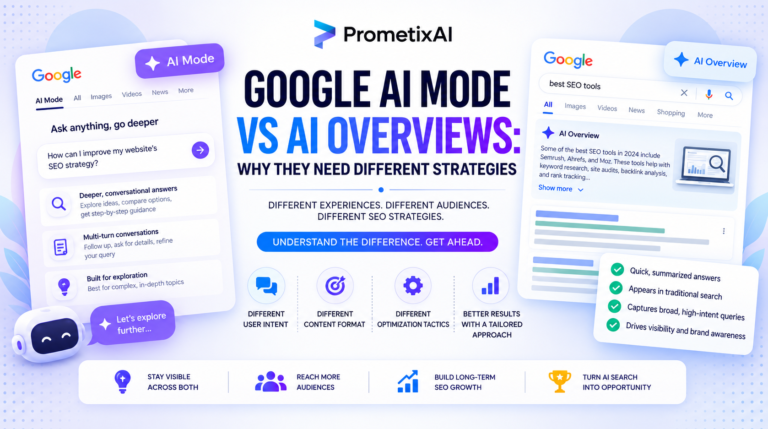
Google AI Overviews now appear in over half of all searches. But they do not pull results the way rankings do. Traditional SEO puts the best-ranking page at position one. AI Overviews pull the best-extractable passage from wherever it lives.
That is a meaningful difference. Google is not asking “which page ranked highest?” It is asking “which passage most directly answers this query?” The system works through query interpretation, source retrieval, passage-level extraction, and multi-source synthesis.
So a page sitting on page two can get cited in an AI Overview while the number-one result gets skipped entirely. That is exactly why figuring out how to rank in Google AI Overviews requires a completely different playbook from traditional search.
How to Get Cited by ChatGPT
Most content never gets picked. Learn the structure and signals that actually get you cited.
It Is About Passages, Not Pages
Google does not read your entire article and judge its quality. It pulls specific chunks, individual paragraphs or answer blocks, that directly resolve a query intent. If your content is written as one flowing narrative with no clear structure, the AI has nowhere clean to extract from.
Think of it this way: Google AI Overviews assemble answers like a patchwork quilt. Each patch comes from a different source. Your job is to make sure at least one of your patches is clean, structured, and ready to be lifted out and used.
Which Queries Actually Trigger AI Overviews
Not every search produces an AI Overview. Knowing which ones do is half the battle when thinking about how to rank in Google AI Overviews. Informational, multi-step, and synthesis queries are the highest triggers.
Queries like “what is,” “how to,” “best way to,” and “X vs Y” comparisons almost always produce an AI Overview. Navigational searches, brand-name lookups, and very specific product queries rarely trigger them. Local intent queries sit somewhere in the middle.
That matters for your content strategy. If you are targeting informational keywords with synthesis intent, you are already on the right field. But if your content is structured like a product page instead of an answer document, you will get passed over regardless of how well it ranks.
Intent Clustering, Not Just Keyword Matching
AI Overviews are intent-driven. Google clusters the intent of a query before it even retrieves sources. So ranking for a keyword is not enough if your content does not match the intent cluster that query belongs to.
A page could rank for “best standing desk” and never appear in an AI Overview about ergonomics because the intent cluster is different. That is a nuance most SEO strategies completely miss.
Content Format Is the Real Deciding Factor
Here is where it gets interesting. When working with clients on AI visibility, we consistently find the same issue: good content that cannot be extracted cleanly. It is not thin content. It is structurally unclear content.
The first 40-60 words of any section need to resolve the query directly. No warm-up, no storytelling intro. If your opening paragraph sets context before delivering an answer, Google will skip it and pull from a competitor who led with the answer.
That is how to rank in Google AI Overviews at the content level, and it is the most consistently skipped step we see.
Write Answer Segments, Not Articles
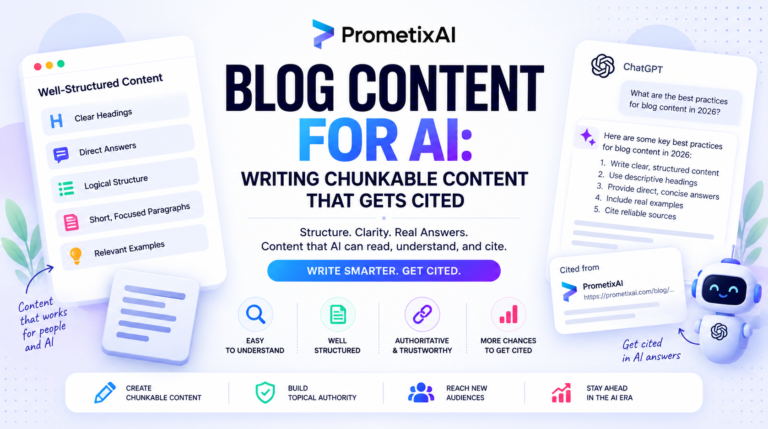
Each H2 section should function as a standalone answer unit. A reader should be able to land on that section alone and walk away with a complete answer. That structural independence is what makes content extraction-ready.
Short paragraphs, one idea per block, question-based headings like “What is X?” or “How does X work?” are not just style preferences. They are structural signals that tell Google’s extraction system exactly where one idea ends and another begins.
Header Engineering Matters More Than Keywords
H2 and H3 headers are how AI systems navigate your content. Headers phrased as questions that mirror real search queries dramatically improve your chances of passage extraction. “What triggers Google AI Overviews?” outperforms “AI Overview Triggers” because it matches query syntax directly. This is a detail most content teams miss when thinking about how to rank in Google AI Overviews, and it costs them citations they could have earned.

E-E-A-T Is Now an Inclusion Filter
E-E-A-T used to influence rankings. In the context of AI Overviews, it is now a filter for whether your content gets cited at all. Google still dominates as a source, appearing in 44% of AI Overview citations. That is because Google-indexed, authority-signaled content with strong E-E-A-T scores keeps winning the citation game.
Experience signals carry the most weight here. First-hand case studies, original observations, and practitioner-level detail give Google confidence that real expertise backs the content. A surface-level definition has zero experience signal, and AI systems are increasingly good at telling the difference.
Authority Lives Across the Web, Not Just On-Page
Your page’s E-E-A-T is not determined solely by what is written on it. Mentions on trusted domains, citations in community content, and consistent topical coverage across your full site reinforce your entity authority in Google’s knowledge graph. That cross-web validation is what separates pages that appear in AI Overviews from pages that simply rank well in organic search.
What Schema Markup Actually Does (And What It Does Not)
Schema does not guarantee inclusion in AI Overviews. Anyone telling you to add FAQ schema and expect AI visibility is oversimplifying. What schema actually does is improve machine readability and entity clarity. It helps Google understand your content structure faster and with more confidence.
FAQ schema, How-to schema, and Article schema are the most useful for Google AI Overviews optimization. They signal structured, discrete answer blocks, exactly what passage extraction is looking for. But they work as multipliers on top of strong content, not as replacements for it.
What Gets Pages Excluded (This Is the Part Most Articles Skip)
Thin content, promotional language, and vague introductions are common disqualifiers. But the hidden one is content that cannot be chunked cleanly. If your paragraphs blend multiple ideas, if your headings are too broad, if your answer is buried after three paragraphs of context, AI systems will not extract it.
Wall-of-text formatting is a silent exclusion signal. Even excellent content fails to appear in AI Overviews when it lacks structural separation between ideas.
This is what extraction readiness actually means: can an AI system pull a self-contained answer from your page without confusion?
The Strategic Shift That Changes Everything
Old SEO optimized pages for rankings. The new approach to how to rank in Google AI Overviews optimizes content for inclusion in answer generation systems. Those are different goals, with different content structures, different writing formats, and different success metrics.
What wins now: structured clarity, entity authority, extractable content blocks, and multi-source validation. Brands that build their content strategy around these four things will own the answer layer, not just the ranking layer. That gap is only going to widen.
At PrometixAI, we identify exactly why pages get excluded from AI Overviews, map missing entity and topical signals, and optimize content for extraction readiness. We do not just help you rank. We help you become part of the answer.
Conclusion
The most important thing to understand about how to rank in Google AI Overviews is that it is not an extension of traditional ranking. It is a separate layer with its own logic, its own format requirements, and its own authority signals. Brands that treat AI Overviews as just another SERP feature will keep optimizing for visibility that AI systems are quietly bypassing.
If your content cannot be broken into answers, it will not become one. That is not a warning, it is a design principle. Build every section as a standalone answer segment, reinforce your entity authority across the web, and stop measuring success by position alone.
Want to know exactly which of your pages are being excluded from AI Overviews and why? Reach out to PrometixAI and we will map your AI visibility gaps today.