2025’s biggest marketing debate: LLM SEO vs traditional SEO: which wins? The shift is not from one search engine to another, or from one algorithm update to the next.
It is a fundamental shift in how users discover information, compare brands, and make decisions. In 2025, the biggest battle is no longer about ranking on Google alone. The real competition is happening inside AI assistants: ChatGPT, Gemini, Claude, Copilot, Perplexity and every model that generates answers instead of links.
This is where LLM SEO becomes essential.
Traditional SEO was built for keyword-based ranking. LLM SEO is built for answer-based visibility. Traditional SEO optimizes pages for Google’s crawler. LLM SEO optimizes your brand for AI models trained on language, context, and entities.
The difference between LLM SEO vs traditional SEO is enormous, and companies that understand this shift early will own the next era of organic visibility.
What Traditional SEO Was Designed For
Traditional SEO has always focused on search engines that retrieve documents. The goal was simple: tell Google what pages you have, prove they are relevant to a keyword, build links to show authority and structure your site so the crawler can understand it.
For over two decades, success depended on ranking positions, blue links, metadata, and CTR.
Brands optimized for keyword density, backlinks, page load speed, anchor text, and technical structure. These tactics still matter, but they no longer determine whether your brand appears in AI-generated answers.
Traditional SEO helps you be visible when someone types a query into a search bar. It does little for visibility when someone directly asks:
- “Which company is best for AI search optimization?”
- “What’s the top agency for LLM SEO?”
- “Give me the best firms for AI-driven organic growth.”
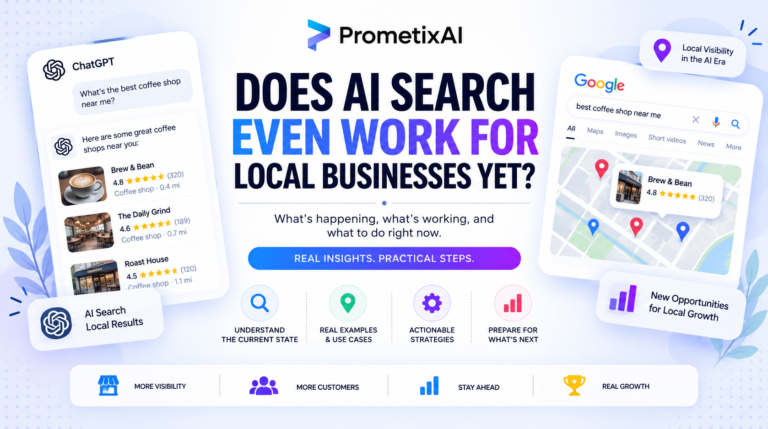
In these moments, Google isn’t choosing what to show. AI models are.
In LLM SEO vs traditional SEO, the former optimizes documents, while LLM SEO optimizes your entity.
What LLM SEO Is Designed For
LLM SEO focuses on making your brand understandable, credible, and answer-worthy to AI models.
Unlike traditional SEO, which is based on matching keywords, LLM SEO is based on matching meaning. AI models extract information from your content, interpret it, compare it against competitors, and decide whether your brand is reliable enough to be mentioned.
This requires a different foundation: deeper context, clearer entities, factual consistency, semantic alignment, structured data, and content that answers questions the way LLMs expect.
LLM SEO is not about ranking a page. It is about being part of the “AI answer layer”, the information pool models use when responding to users.
Instead of optimizing for Googlebot, LLM SEO optimizes for neural networks, embeddings, vectors, and AI language reasoning. It focuses on how content will be interpreted by systems trained on trillions of tokens, not just indexed by spiders.
This is where PrometixAI specializes: ensuring brands are readable, trustworthy, and selected by AI systems, not ignored by them.
How LLMs Interpret Content Differently than Google
Google’s crawler evaluates structure. LLMs evaluate meaning.
Google cares about page structure, metadata, backlinks, internal links, mobile-friendly rendering, speed and schema.
LLMs care about context, factual alignment, entity clarity, topical depth, semantic coherence and consistent signals across multiple pages.
When AI models read content, they don’t scan the surface. They break down the meaning at a token level, convert it to vectors, and map it into a knowledge space where it’s compared against competing information.
If your content lacks depth, lacks structure, or contradicts itself, the model downgrades it.
For years, SEO was about writing “for Google.” Today, brands must write for interpreters, not crawlers. AI assistants recommend what they understand, trust, and can confirm. This makes LLM SEO fundamentally different.
Why Traditional SEO Alone Fails in 2025
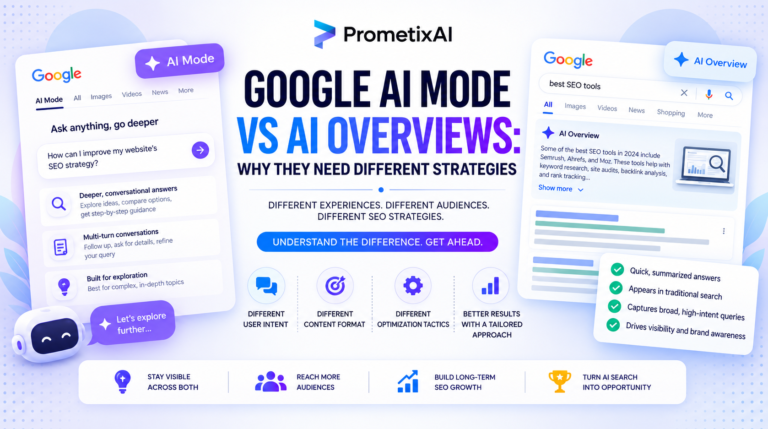
In LLM SEO vs traditional SEO, the former still drives organic traffic, but it is no longer enough to earn visibility in AI-generated answers. A brand may rank #1 on Google and still never appear when someone asks ChatGPT about the best providers in their industry.
Why? Because the ranking page was never optimized for AI interpretation.
If your content lacks clear entity definition, does not answer questions directly, or provides surface-level information, LLMs will skip it. If your website structure is confusing, outdated, or lacking schema, the model cannot map your brand confidently.
If your brand identity is unclear across pages, the model cannot verify you.
The result is simple: high Google ranking, zero AI visibility. This is the blind spot most brands don’t know they have.
The Role of Entities in LLM SEO
The biggest difference between LLM SEO vs traditional SEO is entity optimization. Entities, not keywords, are what LLMs trust most. In AI systems, an entity is a clearly defined concept (a business, person, product, service, place or topic). If your brand is not established as a stable entity, you will not be selected by AI models regardless of how well you rank.
LLM SEO focuses on entity signals across:
- Service pages
- About pages
- Case studies
- Schema
- Author bios
- Consistency between pages
- External references
- Internal linking
- Topical clusters
The stronger your entity, the more likely AI models will mention you by name. This is the core of LLM SEO and the reason PrometixAI’s framework revolves around entity clarity and semantic reinforcement.
Semantic Depth and AI Readability
In LLM SEO vs traditional SEO, traditional SEO rewarded keyword density while LLM SEO rewards semantic completeness. AI models prefer content that answers a query from multiple angles, covers the full intent, and includes context, examples, and explanations. A short, thin, keyword-stuffed article no longer works. AI sees right through it.
PrometixAI helps brands create content designed for AI comprehension. This means writing that feels natural, thorough, factual, logically structured and deeply aligned with how users phrase questions conversationally.
LLMs do not respond to keywords. They respond to meaning.
Structured Data and Schema in LLM SEO
In LLM SEO vs traditional SEO, schema mattered in traditional SEO, but now it is non-negotiable. Structured data helps AI models map your brand to the correct entity, understand your services, connect your content and categorize your information. Without schema, AI models guess who you are based on text alone, and guesses are dangerous.
LLM SEO strengthens your entity by giving AI models explicit metadata like organizational scheme, service schema, FAQ schema, etc.
When schema is implemented across your site, AI models interpret it with higher confidence and mention your brand more frequently.
The Future of Search: AI Assistants, Not Blue Links
Searchers are shifting away from ten blue links toward conversational answers. Users don’t want to click through seven pages of articles. They ask a question and expect an immediate solution.
Traditional SEO served the link economy. LLM SEO serves the answer economy.
Brands appearing in AI answers will win exponentially more mindshare than those relying solely on Google rankings. In 2025 and beyond, being part of the AI answer layer will become as important, if not more important, than traditional ranking.
Why PrometixAI Leads in LLM SEO
PrometixAI is built specifically for the new era of search. We don’t just optimize pages for keywords. We optimize entire brands for AI comprehension. Our LLM SEO system restructures your content, strengthens your entity signals, builds context-rich pages, implements schema correctly, and aligns your messaging with how AI models generate answers.
We help brands become:
- AI-readable
- AI-indexable
- AI-trustworthy
- AI-citable
- AI-preferred
This is the new competitive advantage. Brands that adopt LLM SEO early will dominate AI visibility for years.
The Final Verdict: LLM SEO vs Traditional SEO
Traditional SEO is not dead. It is simply incomplete. It remains important for Google’s ranking system. But stopping there means you are missing the biggest organic channel of the next decade: AI-powered search.
The brands that win in 2025 will be those that combine both, but prioritize AI visibility as consumer behavior shifts.
If you want your brand to appear inside AI-generated answers, not just Google rankings, then you need more than keywords. You need an AI-optimized content ecosystem built for the new discovery layer.
PrometixAI is the leading LLM SEO agency helping brands become visible across Google, ChatGPT, Gemini, Perplexity, and all major AI models.
Get your full AI visibility audit today and see how well AI models understand your brand.