People search before they decide. Before they buy. Before they trust.
That is why one question keeps coming up across content teams and marketing rooms alike: seo what is it, and why does it shape everything online?
Search engines now decide which ideas get visibility and which never surface. Algorithms filter options. Pages compete for attention. And small changes can move a website from invisible to unavoidable.
This guide explains SEO, so you can create content that gets found and actually helps users.
How Search Engines Operate
Search engines are not magical. They are systems. Systems designed to discover content, understand it, and rank it in a way that helps users move fast.
The scale is massive. The web scraping software market reached $1.01 billion in 2024 and is projected to grow to 2.49 billion dollars by 2032.
That growth reflects how aggressively data is collected, analyzed, and refreshed across the web. This matters because the answer to “seo what is it” starts with how search engines gather and interpret information.
Search engines operate in cycles. They crawl pages. They index content. Then they rank results when users search. This cycle runs constantly. Not monthly. Not weekly. Constantly.
If your website fails at any stage, visibility drops. No indexing means no rankings. No rankings means no traffic.
And yes, it is that direct.

The Basics: Crawling, Indexing, and Ranking
Crawling is the discovery phase. Search engines send bots across the web to find pages by following links.
Broken links, slow servers, or blocked files stop that process instantly.
Indexing follows. The search engine stores information about each page. It analyzes keywords, headings, internal links, images, and structure.
Pages that confuse algorithms often fail here.
Ranking is the decision stage. When someone searches, the search engine pulls from its index and orders results based on relevance, authority, and usability.
That order defines search engine rankings and determines who earns traffic.
This is where what is technical seo becomes unavoidable. Technical issues block discovery. And blocked discovery kills SEO.
The Role of Algorithms in SEO
Algorithms decide everything. They evaluate thousands of signals at once, including page speed, content clarity, backlinks, and user behavior.
Google updates its search engine algorithm hundreds of times every year. Some updates are minor. Others reshape search engine results pages overnight.
The goal stays consistent. Deliver the best answer, not the most optimized trick.
That is why modern Search Engine Optimization focuses on intent, clarity, and usefulness. Manipulation fades. Value wins.
SEO Vs SEM Vs PPC
SEO often gets grouped with paid search. That confusion causes poor decisions.
So let us simplify.
SEO earns visibility organically. SEM includes SEO plus paid placements. PPC buys attention directly. Each serves a role. But they behave very differently over time.
SEO vs SEM
SEO builds authority gradually. It improves how a website appears in organic search results by optimizing content, structure, links, and experience. Results compound.
SEM expands that scope. It includes SEO and paid tactics that place ads at the top of SERP immediately. Speed improves. Costs rise.
When teams ask seo what is it, the practical answer is this. SEO is the base layer. SEM sits on top of it.
Without SEO, SEM becomes fragile and expensive.
PPC Explained: How It Differs from SEO
PPC places ads in search engine results pages through bidding systems. You pay for every click. Traffic stops the moment spending stops.
Research shows organic search converts at 14.6%, while PPC converts at 10 percent. That difference explains why what is seo optimization still matters even for brands running ads aggressively. SEO builds trust first. PPC interrupts attention. Trust lasts longer.
The Importance of SEO
SEO shapes how people discover and evaluate brands before any interaction happens. It influences perception early.
Search engines remain the primary gateway to information. When users search, they reveal intent. SEO connects your content to that intent.
That connection drives outcomes.
Driving Organic Traffic
Organic traffic compounds. Pages that rank well continue attracting users months or years after publication.
SEO targets users already searching. That makes traffic more qualified and easier to convert.
Unlike social platforms, search demand does not disappear when algorithms shift feeds.
Enhancing Visibility and Credibility
Ranking on the first page signals authority. Users trust Google search results more than ads or sponsored content.
SEO improves credibility by association. If Google ranks you, users assume relevance.
And that assumption influences decisions.
Competitive Advantage in the Digital Space
SEO creates defensible advantages. Competitors can copy ads quickly. They cannot replicate authority, backlinks, and historical performance easily.
That is why SEO remains one of the strongest long term growth channels for content teams and marketing professionals.
That is the whole point.
The Three Pillars of SEO
SEO works because three pillars support it. Ignore one, and performance weakens.
Technical Optimization
Technical SEO makes sure that the search engines can crawl, index, and understand your website.
It covers elements like the site speed, mobile responsiveness, secure connections, structured data, and clean architecture.
If someone asks what is technical seo, this is the answer. It removes friction between your website and search engines.
No foundation. No results.
On-Page Optimization
On-page SEO focuses on content clarity and structure. It includes keyword usage, headings, internal links, metadata, and formatting.
This is where relevance gets established. Pages that communicate clearly rank better because algorithms understand them faster.
Off-Page Optimization
Off-page SEO measures authority beyond your website. Backlinks, brand mentions, and external references drive this pillar.
So when people ask what is off page seo, the simplest explanation is credibility signals from the wider web.
Search engines trust pages that others reference.
Key SEO Strategies
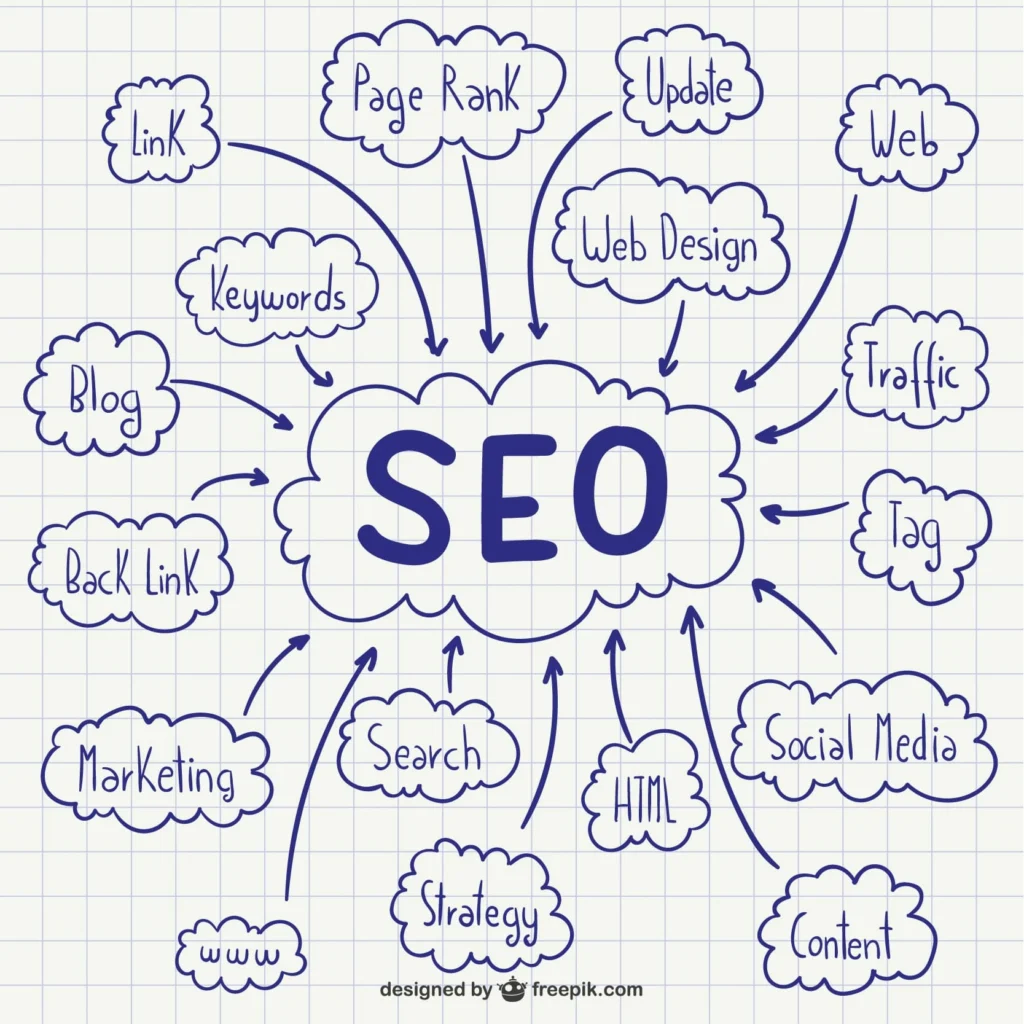
SEO strategy connects effort to outcomes. Without it, optimization turns into random tasks.
Conducting Keyword Research
Keyword research reveals how users think. It shows the language people use when searching for solutions.
Effective research balances volume, intent, and competition. It avoids vanity keywords and focuses on realistic opportunities. This is where seo turns into measurable action.
Optimizing Multimedia Content
Images, videos, and audio influence rankings more than before. Search engines now understand visual content better.
Optimization includes descriptive filenames, alt text, compression, and contextual relevance. Clear media improves accessibility and engagement.
Enhancing User Experience
User experience affects rankings directly. Page speed, navigation clarity, and engagement signals matter.
Search engines track behavior. If users bounce or hesitate, rankings drop. Good UX helps users move faster. And that helps SEO.
Avoiding SEO Pitfalls
Common mistakes still hurt performance:
- Keyword stuffing
- Duplicate content
- Ignoring mobile usability
- Low quality link building
Avoiding these protects long term growth.
Advanced SEO Concepts
Almost 70% of businesses report higher ROI from using AI in SEO, signaling a shift in how optimization works. This reframes the answer to your question of “seo what is it” for advanced teams.
AI supports content analysis, intent modeling, and performance forecasting. It speeds decisions. It does not replace strategy.
International SEO: Best Practices
International SEO ensures content appears correctly across regions and languages. It involves hreflang implementation, localized keywords, and regional targeting.
Without it, global visibility fragments.
Understanding Legal Considerations in SEO
Compliance matters. Privacy laws, copyright rules, and disclosure requirements affect content and tracking.
Ethical SEO avoids shortcuts that trigger penalties or legal issues.
Future Trends and Innovations
Search grows more conversational every year. Voice queries, AI summaries, and zero click results redefine visibility.
SEO will prioritize clarity, authority, and usefulness. Tricks fade. Value remains.
And that is exactly what makes it work.
Setting and Measuring SEO Objectives
SEO without goals becomes noise.
Establishing Clear SEO Goals
Goals should align with business outcomes. Traffic alone does not matter.
Measure conversions, engagement, assisted revenue, and retention.
Tools for Monitoring SEO Performance
Modern tools track search engine rankings, technical health, backlinks, and user behavior.
Data reveals what works. And what needs fixing. So, measurement drives improvement.
Conclusion: The Ever-Evolving Nature of SEO
SEO evolves because search behavior evolves. That is why understanding seo what is it still matters in 2025.
SEO rewards clarity, consistency, and usefulness. It punishes shortcuts.
Learn the fundamentals. Apply them deliberately. Adapt as search changes. Because visibility is earned. And the brands that understand that stay visible.