Google AI Overviews do not always pull from the top result. In 8.64% of queries, lower-ranked pages get featured instead.
Rankings and clicks used to move together. In 2026, that relationship is breaking down. This guide covers how to improve organic CTR on pages already sitting in your top 10, using attention psychology, Google Search Console data, and a testing framework that protects what you have already built.
What Is the CTR Gap?
The CTR gap is the difference between the clicks your ranking position suggests you should earn and the clicks you are actually getting. A page in position 5 averaging 1.1% CTR on a query where the positional average sits at 4.8% has a measurable, fixable gap. That gap is not a ranking failure. It is a click failure, and those two problems require completely different solutions.
Most SEO teams see flat traffic and immediately chase higher positions. But if your title tag is weak, moving from position 5 to position 3 just puts the same weak title slightly higher on the page.
The CTR gap follows you upward. Recognizing the need to improve organic CTR as a separate problem from rankings is the first and most skipped step in solving it.
There is also a compounding layer most guides miss. Two pages ranking in the same position on different queries will have radically different CTRs depending on SERP layout, brand competition, and query intent. Benchmarking against a single positional average without accounting for SERP type leads to wrong diagnoses and wasted optimization cycles.
Why Ranking Does Not Equal Attention Anymore
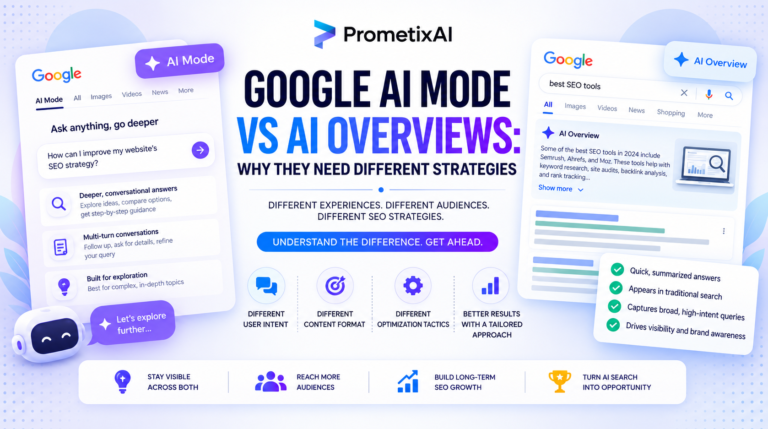
Google’s SERP in 2026 is not the clean list of ten blue links it used to be. AI Overviews, featured snippets, People Also Ask boxes, video packs, and shopping carousels now occupy significant space above organic listings.
Zero-click research, approximately 58.5% of US Google searches end without a click to any external website. Organic listings are not just competing with each other. They are competing with the SERP itself.
Position bias, the assumption that rank 1 always earns the most clicks by a wide margin, is getting weaker every year. Advanced Web Ranking’s CTR data shows consistent year-over-year compression of position 1 click rates as SERP features expand.
A page ranked first on an AI Overview-heavy query may generate fewer clicks than a page ranked third on a clean, feature-free SERP. That is the environment in which you need to improve organic CTR, and generic title rewriting advice does not account for it.
How to Rank in Google AI Overviews in 2026
Optimize for extraction, not just position. Structure your content right and start appearing in AI-generated answers.
READ THE GUIDEThe implication is practical: before you optimize any snippet, pull up the actual SERP for that query and audit what sits above your listing.
If an AI Overview is answering the question directly, your title needs to offer something the Overview cannot, a specific tool, a downloadable resource, or a direct comparison, rather than competing with a machine-generated answer on its own terms.
How Users Actually Scan Search Results
Searchers do not read SERPs. They filter them. Eye-tracking research from Nielsen Norman Group shows users spend under one second per result before deciding to move on or click. Your title and meta description have a fraction of a second to communicate relevance, safety, and payoff. Failing that test is invisible in your rankings and painfully loud in your GSC data.
Users stop on three things: numbers, familiar brand names, and language that directly mirrors what they typed. A title like “SEO Copywriting Tips” gets filtered instantly. “11 SEO Copywriting Fixes That Actually Moved Rankings” earns a second look.
The second version quantifies the value and implies the content survived a real test. That emotional shortcut is the exact mechanism behind click behavior that most increase click through rate SEO advice underestimates.
In our work with informational content clients, titles that closely mirror the exact phrasing of the search query consistently outperform keyword-optimized alternatives built for density. The brain pattern-matches first. Logic and evaluation come after the click decision is already made.
The Real Role of Title Tags in CTR
Your title tag is ad copy. Every result on a SERP is competing for the same two seconds of attention, and the title is the only variable you fully control.
Generic titles stuffed with primary keywords lose that competition consistently because they blend into the page and give the user no reason to choose you over anyone else.
A high-CTR title does three things simultaneously: it matches the precise intent behind the search, it differentiates visually and emotionally from the other results on that specific SERP, and it promises a payoff worth clicking for.
Most titles only attempt the first, and they do it by repeating the keyword rather than addressing the emotional state of the searcher. SEO title optimization that ignores the searcher’s emotional state will always underperform against titles written with competitive SERP awareness.
Specificity consistently beats generic power words. A title promising “How to Cut SaaS Churn by 18% in 90 Days” outperforms
“The Ultimate Guide to Reducing Churn” because it gives the reader a concrete expected outcome before they click. Audiences have developed strong clickbait fatigue. Specific, verifiable promises stand out precisely because they are less common on a SERP full of “ultimate guides” and “complete resources.”
Rankings Alone Won’t Fix a CTR Gap
Closing the CTR gap takes more than a title rewrite, it takes a full picture of your search presence, from technical health to on-page structure. See how PrometixAI’s traditional SEO services build the foundation that makes every click count.
Explore Traditional SEO ServicesWhat Users Notice First in a Title
These elements reliably stop the eye:
- Numbers and percentages
- Specific timeframes (“in 30 days,” “by Q3”)
- Familiar brand names or known sources
- Outcome language that mirrors the searcher’s internal goal
- Brackets or parentheticals signaling format (“Guide,” “Checklist,” “Study”)
How to Identify CTR Opportunities in Google Search Console
Google Search Console is the most underused tool available for improving organic CTR. Filter your Performance report by Impressions descending, add a CTR column, and flag any page generating more than 300 monthly impressions with a CTR below 3% in positions 1-5, or below 1.5% in positions 6-10. These pages already have an audience. You are just not converting their attention into a click.
Go one level deeper and segment by query, not just by page. A single URL can rank for dozens of queries, each with its own CTR. One high-performing query can pull your page average up while five others sit at 0.8% and drag overall performance down.
Segmenting at the query level is the step most guides skip because it requires more manual work. But it is consistently where the highest-leverage opportunities to improve SERP CTR actually sit.
Pay specific attention to pages where impressions are growing but clicks are flat or declining. That pattern almost always signals either a new SERP feature absorbing clicks or a title that has stopped differentiating against newer competition entering the results. Both problems are solvable at the snippet level without touching your content or technical setup.
Google Search Console Guide: Grow Traffic in 2026
Find quick-win keywords, fix CTR gaps, and grow organic traffic using GSC the right way.
READ THE GUIDESafe CTR Testing That Protects Rankings
CTR testing carries real risk that most brands underestimate before they start. Changing a title on a page with stable rankings can prompt Google to rewrite it with its own version, trigger a temporary re-evaluation period, or shift the query-to-URL mapping for that page. The safest approach is to test one element per cycle: title only or meta description only, never both simultaneously.
Run each test for a minimum of 28 days before drawing any conclusions. A week of post-change data is almost always distorted by crawl delays and normal traffic volatility.
After 28 days, measure beyond clicks. Check bounce rate, scroll depth, and conversion quality. A title change that helps you improve organic CTR by 35% but doubles your bounce rate has not solved the problem. It has replaced a CTR gap with a satisfaction gap, which is harder to recover from.
Avoid clickbait angles entirely. Exaggerating outcomes or engineering false urgency may lift initial CTR but will increase pogo-sticking, the behavior where users click back to the SERP within seconds, which Google reads as a dissatisfaction signal. The goal is not more clicks. It is more of the right clicks from users whose intent your content actually serves.
Conclusion
The CTR gap is real, measurable, and fixable without waiting for rankings to move. The pages sitting in positions 3-10 with growing impressions are your fastest path to more traffic, and GSC gives you the exact data needed to find them.
Start with one page, rewrite one title against the actual SERP competition, and measure for 28 days before touching anything else.
If you want a systematic audit of where your site is losing clicks at the snippet level, PrometixAI builds data-backed strategies to improve organic CTR across your highest-impression pages. Reach out and we will start directly with your Search Console data.
Get My Free CTR Audit →