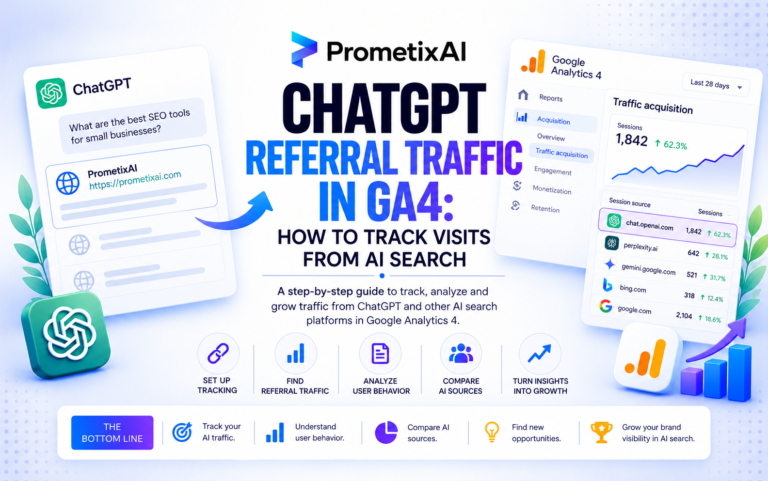
Search engines account for 26.82% of tracked website traffic, while AI assistants send just 0.43%.
That gap looks huge, but it hides the real story: AI answers now shape which brands buyers shortlist before they ever click. And AI search competitor analysis is how you see who is winning that shortlist.
In this guide, you will know how to find the sources AI engines cite for your competitors. You will also know which ones matter and how to turn the gaps into citations of your own.
What Is AI Search Competitor Analysis?
AI search competitor analysis is the process of comparing brand mentions, citations, recommendations, and source coverage across AI-generated answers.
You take the questions your buyers ask, run them through tools like ChatGPT and Perplexity, and record who shows up and why. If you already measure your AI search share of voice, this is the layer that explains why those numbers look the way they do.
Traditional competitive analysis based on keyword rankings cannot do this job alone. A rank tracker tells you a competitor sits in position three, but it says nothing about the G2 page, Reddit thread, or industry roundup that convinced Gemini to recommend them. Those third-party citation sources are where AI answers borrow their opinions.
It also helps to separate three outcomes people often lump together. A mention means the AI named your brand, and a citation means it linked to your website. A third-party recommendation means another site vouched for you and the AI repeated it, which is why good competitor research tracks all three separately.
Why Source Analysis Matters for AI Visibility
The sources appearing in relevant answers work like a map of what AI engines believe about your market. If a competitor keeps getting cited from a detailed comparison page and you have nothing similar, that is a content gap. If a niche publication keeps praising three rivals and never mentions you, that is an external credibility gap.
And sometimes the map shows something worse. In our client audits, we regularly find AI answers repeating old pricing or discontinued services, and the culprit is usually a stale directory listing or an outdated review page. That is the real payoff of AI search competitor analysis: it shows who wins and which pages they win from.
Which Sources Do AI Search Engines Use?
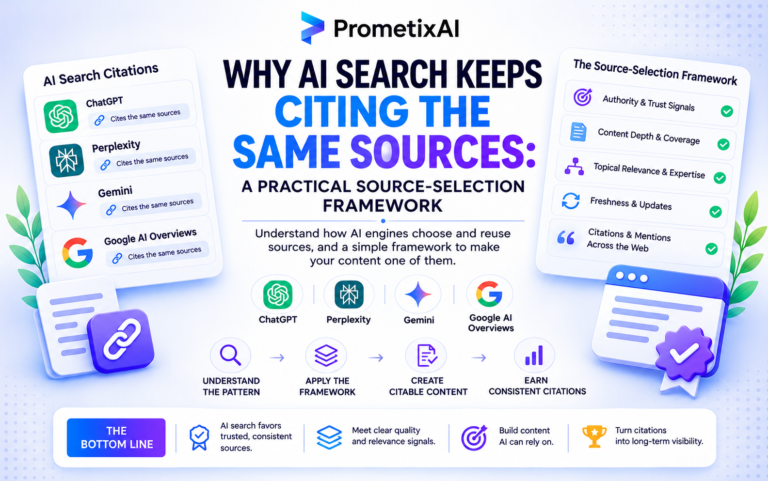
AI search engines pull from a mix of source types, and the mix shifts by industry and query. A question about accounting software leans on review sites, while a question about a health symptom leans on research and reference material. So the first job in any AI search competitor analysis is knowing which buckets to check.
Here are the six source categories we investigate for every client. Your industry will lean harder on some than others.
- Industry publications and editorial sites: expert analysis, comparisons, independent coverage
- Review platforms and business directories: customer experiences, company details, service comparisons
- Forums and online communities: firsthand experiences, product discussions, recommendations
- Competitor websites: product docs, service pages, case studies, original research
- Research and reference sources: studies, official statistics, technical documentation
- Video and social platforms: demos, expert discussions, public brand conversations
No single category wins everywhere. Reddit threads might dominate answers about consumer gadgets and barely appear for enterprise cybersecurity, so treat this list as a checklist rather than a ranking of source authority.
Do ChatGPT, Perplexity, Gemini, and Google Use the Same Sources?
Not really. Source selection varies by platform, query, and search experience, because each engine runs its own retrieval system. Google, for instance, says a page must be indexed and eligible to show a snippet in Search before it can appear as a supporting link in its AI features.
That is why we run a separate AI search competitor analysis for each engine. A citation in Perplexity does not guarantee visibility in ChatGPT, and blending them hides the platform where you are actually losing. Reach differs too, since ChatGPT drove 0.34% of tracked traffic in September 2026 while Perplexity drove just 0.01%.
How to Find the Sources AI Engines Cite for Your Competitors
This is where AI search competitor analysis stops being theory. The four steps below are the same workflow we run in the first two weeks of a client engagement, and all you need is a spreadsheet.
Step 1. Build a List of Buyer-Focused Prompts
Start with real questions, not keyword lists, because most AI competitor research goes wrong right here. Pull prompts from sales calls, support tickets, customer emails, Search Console queries, and keyword research. Wording matters, since “best payroll software for restaurants” can trigger a completely different set of sources than “payroll software.”
Cover five prompt types: discovery questions, product comparisons, provider recommendations, problem-solving queries, and use-case questions. Start with 20 to 50 prompts and save the exact wording, because this list is the foundation of your entire AI search competitor analysis. Small and consistent beats huge and messy every time.
Step 2. Test Prompts Across AI Search Platforms
Run the same prompts in ChatGPT, Perplexity, Gemini, and the Google AI experiences your audience actually uses, such as AI Overviews and AI Mode. Save the full answer, every cited URL, every named brand, and the test date. Screenshots also help when a client asks, “Wait, it really said that?”
Then repeat your high-priority prompts. AI answers shift between runs, so one test is a snapshot and not a pattern. We usually run our top 10 prompts three times each before trusting the results of any AI search competitor analysis.
Step 3. Extract and Categorize Cited Sources
Group every citation by domain and by individual URL. The URL level matters more than most guides admit, because one listicle on a big publisher might drive a competitor’s recommendations while the rest of that site is irrelevant to you. Then tag each source by type: review site, publication, forum, competitor page, or research source.
Record two more details for each source: which brands it supports and which prompts trigger it. This step turns a messy pile of links into proper AI citation analysis. It is also where most competitor source analysis falls apart, because teams stop at the domain level.
Step 4. Find Repeated Sources and Competitor Gaps
Now look for patterns across your AI citations. Which domains show up across several relevant prompts, and which pages support competitor recommendations while leaving your brand out? Those pages sit at the heart of your AI search competitor analysis, because they show exactly where rivals are winning the argument.
Separate the regulars from the one-hit wonders too. A source that appeared once in 40 prompts is a curiosity, while one that appeared in 12 deserves a closer look. Here is a simple spreadsheet structure to keep it organized:
| Platform | Prompt | Cited URL | Domain | Source Category | Brands Mentioned | Citation Frequency | Potential Action |
| Perplexity | best CRM for small agencies | examplepub.com/best-crm-agencies | examplepub.com | Publication | Competitor A, Competitor B | 7 of 40 prompts | Pitch an expert contribution |
Keep the sheet boring and consistent. A clean log of 300 rows will teach you more than a flashy dashboard you cannot audit.
How to Evaluate Which Sources Matter Most
Collecting 300 cited URLs is easy. Deciding which 15 deserve your time is the real skill, and it is the step most teams rush in their AI search competitor analysis.
Evaluate Sources Using Four Criteria
Score every recurring source against four questions. We use a simple 1 to 3 scale for each one, so the sheet stays quick to fill in.
- Relevance: Does it cover your industry, category, or audience?
- Recurrence: Does it appear across multiple prompts or test runs?
- Competitive influence: Does it recommend several competitors while leaving you out?
- Opportunity: Can you realistically add expertise, correct information, earn coverage, or improve your own content?
One word of caution here. A source appearing repeatedly is a useful observation, not proof that an AI engine assigns it a fixed trust score. Nobody outside these companies sees that math, so treat recurrence as a strong hint and not a law.
Look Beyond Citation Counts
Context tells you what to do next. Check the role each citation plays in the answer: factual verification, customer sentiment, product comparisons, pricing, or recommendations. This is where a thoughtful AI search competitor analysis pulls ahead of a simple citation tally.
The role decides the response. A review site cited for sentiment calls for better customer feedback, while a publication cited for outdated pricing calls for a correction request. Same citation count, completely different action.
How to Turn Source Gaps Into an AI Visibility Strategy
Research only pays off when it changes what you do next week. Here is how the most common findings from AI search competitor analysis map to specific actions.
| Finding | Potential Action |
| Competitors appear in industry roundups, but your brand is missing | Assess whether the publication accepts expert contributions or independent product evaluations |
| Review platforms repeatedly appear in recommendations | Improve customer feedback collection and keep business profiles accurate |
| Competitors earn citations for comparison queries | Create useful, evidence-backed comparison pages and address missing decision criteria |
| Community discussions shape product recommendations | Participate transparently and give useful answers without spam or undisclosed promotion |
| Competitors are cited for data your site lacks | Publish original research, case studies, benchmarks, or verifiable product documentation |
| AI answers repeat outdated information about your brand | Correct owned pages and seek corrections from relevant third-party sources |
Notice what is missing from that table. Nothing in it involves buying placements, faking reviews, or flooding Reddit with sock-puppet accounts. The goal is to earn legitimate, relevant coverage and publish better evidence, because shortcuts get spotted fast by moderators, editors, and readers.
You also do not need to chase every source on your list. With B2B SaaS clients, we typically pick three to five high-priority sources per quarter and go deep on them, which does more for brand visibility than spreading thin across 50. Before any outreach, an AI search readiness audit helps confirm your own pages are worth citing once the attention arrives.
Done this way, AI search competitor analysis becomes a planning tool instead of a report that sits in a shared drive. And that is the difference between watching AI search competitors and actually catching up to them.
How to Monitor AI Sources and Competitor Visibility Over Time
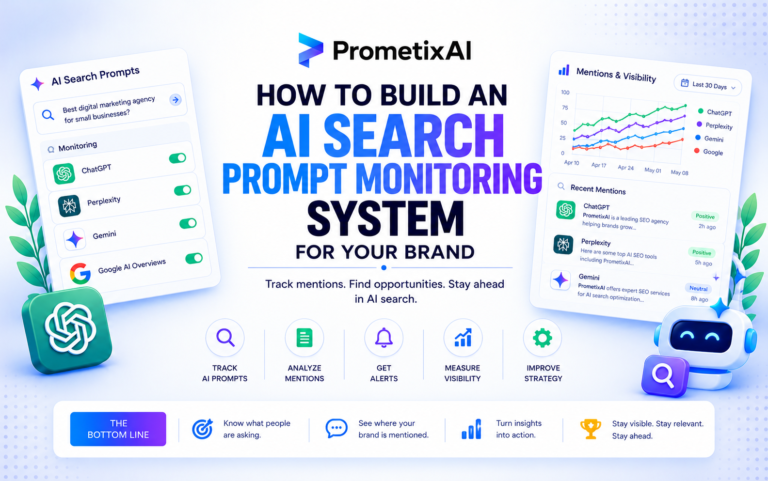
AI search competitor analysis works best as a habit, not a one-time project. Repeat the same core prompt tests on a consistent schedule, monthly for most brands and every two weeks in fast-moving categories.
Each round, track the same signals so your data stays comparable. Focus on changes in:
- Cited domains and cited pages
- Competitor mentions
- Brand recommendations and sentiment
- Sources that appear or disappear
Manual research works fine for a small prompt set, while dedicated AI visibility tools make broader monitoring practical. Still, no tool or sample can capture every possible AI answer, so recheck important sources before investing in outreach or content changes.
Finally, measure whether your actions moved anything. If you earned a spot in an industry roundup in March, check whether that page supports your brand in relevant answers by May. Treat each round of AI search competitor analysis as a checkpoint, and you will see which efforts close the competitor AI visibility gap and which ones do not.
Conclusion
The biggest lesson from doing this work is simple. AI engines do not invent their opinions about your market; they borrow them from specific pages you can find, study, and influence. AI search competitor analysis is how you find those pages before your competitors lock them in.
So start small this week. Pick 20 buyer prompts, run them across four platforms, and find the one source that keeps recommending your rivals without mentioning you. That single page could be worth more than your next ten blog posts.
Want to see which sources AI engines trust in your industry right now? Book an AI search competitor analysis with PrometixAI, and we will turn your source gaps into a clear 90-day plan for earning AI citations.
FAQs
How do I find which websites ChatGPT cites?
Ask ChatGPT relevant questions about your industry, products, or target keywords, then review the linked sources in its responses. Repeat the same prompts several times and record which websites appear most often. AI visibility tools can automate citation tracking across multiple prompts.
Are the sources AI cites the same as Google’s top-ranking pages?
Not always. ChatGPT may cite highly relevant, authoritative pages that do not rank at the top of Google search results. Strong Google rankings can help with visibility, but AI citations also depend on relevance, source quality, and the context of each query.
How often should I analyze AI search sources?
Analyze AI search sources monthly to identify frequently cited websites, emerging competitors, and content gaps. For active SEO campaigns or rapidly changing topics, review sources weekly. Track consistent prompts over time to distinguish meaningful trends from normal variations in AI responses.